

By Chuckey Radamel Thomas
MONROVIA, Liberia – Liberia’s petroleum sector is showing signs of renewed activity, with the Liberia Petroleum Regulatory Authority (LPRA) reporting a contribution of approximately US$13.8 million to the national budget while international interest in the country’s offshore oil prospects continues to grow.
The reported revenue performance comes alongside plans by French energy multinational TotalEnergies to expand its operations in Liberia, with about six vessels expected to arrive in early 2027 to facilitate offshore exploration.
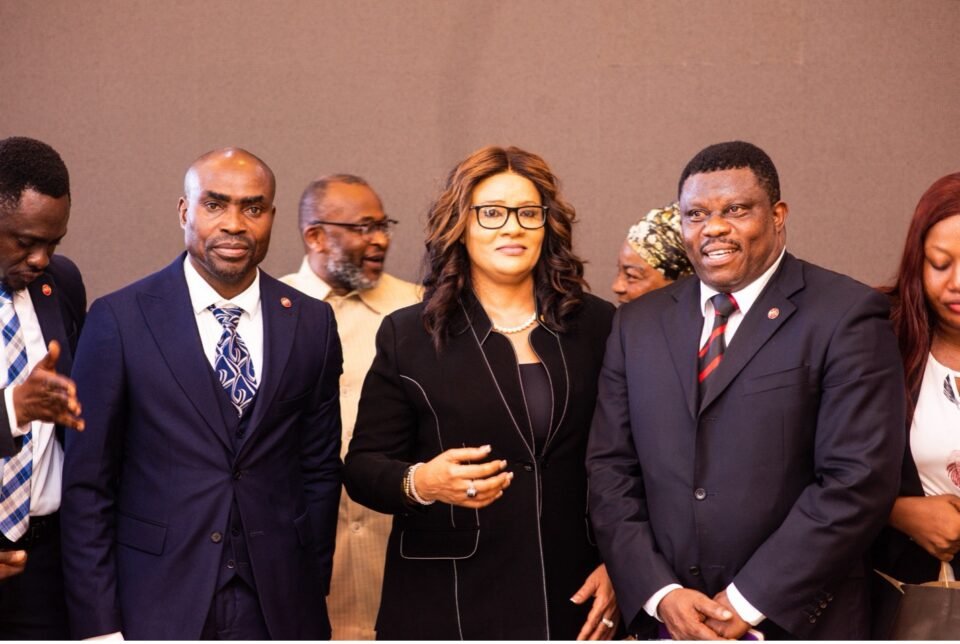
The developments were announced Thursday during the unveiling of the LPRA’s 2026–2030 Strategic Plan in Monrovia, where Director General Marilyn T. Logan outlined the authority’s financial recovery and efforts to reposition Liberia within the global petroleum industry.
Logan recalled that the institution was once facing serious financial difficulties, with only US$6,339 remaining in its bank account. She said the authority has since undergone significant changes, emerging as an important source of revenue for the government.
Figures published on the Liberia Revenue Authority’s dashboard indicate that the LPRA generated approximately US$13.9 million in payments during 2026, ranking ninth among the country’s ten leading revenue contributors.
Beyond its financial performance, Logan disclosed that Liberia has concluded eight new production-sharing contracts over the past 18 months. All eight agreements have received legislative ratification, creating additional opportunities for petroleum exploration and investment.
She cautioned against judging the authority’s performance exclusively by the discovery of commercially viable oil, arguing that attracting credible investors and establishing a strong regulatory framework are equally important to the country’s long-term petroleum ambitions.
Meanwhile, TotalEnergies is positioning itself for a stronger operational presence in Liberia.
Bertrand Touze, the company’s Vice President and Country Delegate for its Liberian exploration programme, confirmed that an office has been established in the country and that engagements with local businesses are already underway.
He said the anticipated arrival of approximately six vessels in early 2027 will support the company’s planned offshore exploration activities.
Touze also reaffirmed the company’s commitment to transparency and adherence to internationally recognized health, safety and environmental requirements.
The newly introduced five-year strategic framework outlines the LPRA’s priorities for building a more effective petroleum industry. These include improving regulatory supervision, expanding local technical capabilities, securing petroleum information, enforcing environmental safeguards and increasing transparency and Liberian participation.
To strengthen the expertise of its workforce, Logan announced that the authority’s entire technical department is expected to undertake practical training in France in January 2027, with particular emphasis on petroleum data analysis.
The LPRA is also preparing to deepen cooperation with the Environmental Protection Agency through joint regulatory arrangements, improved safety monitoring and the development of emergency-response mechanisms in anticipation of possible offshore drilling operations.
Another major component of the authority’s institutional development is the construction of a new headquarters, featuring a petroleum data processing and viewing centre. Work on the facility is expected to commence in January 2027.
However, the expansion of the sector has also brought renewed attention to the division of responsibilities among public institutions.
Minister of State for Presidential Affairs Samuel A. Stevquoah highlighted concerns over possible overlapping functions between the LPRA and the National Oil Company of Liberia, stressing the need to examine their respective mandates and establish clearer institutional boundaries.
He emphasized President Joseph Nyuma Boakai’s position that Liberia must secure meaningful economic benefits from its petroleum resources, ensuring that international investment translates into tangible opportunities for citizens.
For his part, Representative Sam P. Jallah, Chairman of the House Committee on Hydrocarbons, assured that the Legislature would maintain oversight of the authority’s activities and monitor the implementation of its five-year development programme.
Despite decades of offshore exploration, Liberia has not yet achieved commercial oil production. The latest developments therefore represent another important phase in the country’s efforts to establish a viable petroleum industry.
With new exploration agreements, increased investor engagement and plans to strengthen regulatory institutions, the LPRA says it is working to create the conditions necessary for responsible petroleum development and ensure that future discoveries, if achieved, contribute meaningfully to Liberia’s economy.
