

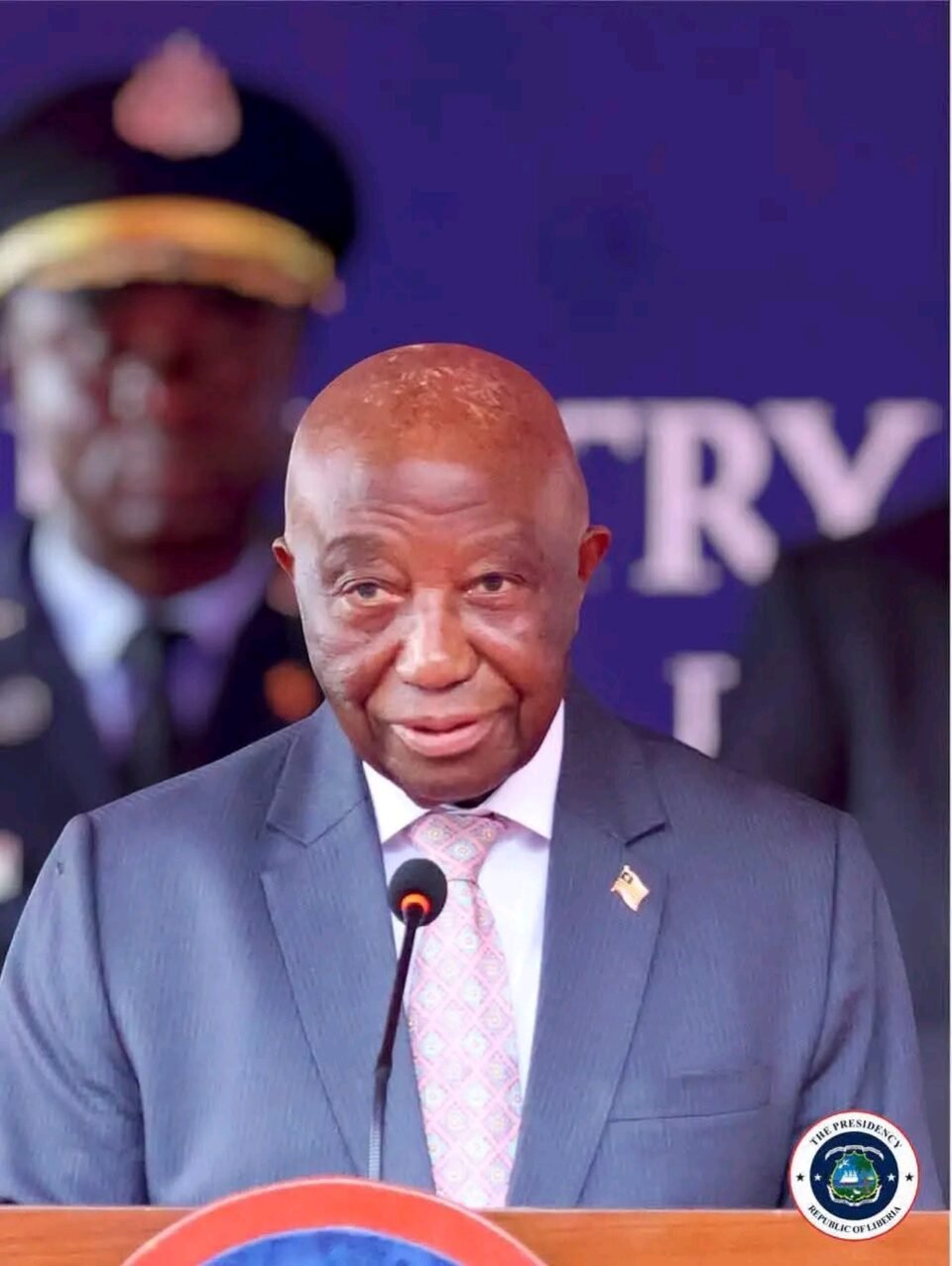
MONROVIA, Liberia — President Joseph Nyuma Boakai has introduced a new foreign policy framework aimed at reshaping Liberia’s engagement with the international community, placing national sovereignty, economic advancement and the protection of citizens at the heart of the country’s diplomatic agenda.
Unveiled in Monrovia on Tuesday, November 17, 2026, the framework represents Liberia’s first major foreign policy reform in more than 50 years, according to the President.
Speaking at the official launch, Boakai argued that Liberia’s diplomatic approach must reflect the realities of a rapidly changing international environment, where economic competition, geopolitical realignments and emerging security challenges are redefining relations among nations.
He maintained that Liberia must move beyond traditional diplomatic engagements and adopt a strategy that delivers tangible economic and social benefits to its population.
The President recalled Liberia’s historic position as Africa’s oldest republic and its participation in the founding of the United Nations in 1945, emphasizing that the country’s contributions to international peace, African independence and regional cooperation should inform its future diplomatic direction.
The new policy establishes five strategic priorities to guide Liberia’s international relations.
The first focuses on protecting national sovereignty and strengthening the country’s ability to defend its territorial boundaries, natural resources, institutions and strategic interests. Boakai stressed that Liberia must exercise greater responsibility over its land, territorial waters and national assets.
Economic diplomacy forms the second major component. The President wants Liberian diplomatic missions to become more active in attracting foreign investment, particularly in agriculture, mining, infrastructure, tourism, manufacturing and technology.
He also underscored Liberia’s participation in the African Continental Free Trade Area, emphasizing that the country’s natural wealth must be managed transparently and converted into opportunities for national development.
On the protection of citizens abroad, the framework seeks to strengthen consular services and establish closer engagement with Liberians living overseas. Boakai described the diaspora as an important development partner, citing its potential contributions through professional expertise, financial investment and international networks.
The fourth priority concerns Liberia’s role in regional and global affairs. The President pointed to the country’s election to a non-permanent seat on the United Nations Security Council in June 2025 as evidence of its growing diplomatic standing.
He pledged to use Liberia’s participation in the Mano River Union, ECOWAS, the African Union and the United Nations to promote peace, democratic governance, regional cooperation and security, particularly across West Africa and the Sahel.
Technology and digital competitiveness constitute the fifth priority. Boakai warned that Liberia cannot afford to remain on the margins of global technological development, stressing the importance of preparing young people with the skills needed to compete in the international digital economy.
He declared that the country must position itself to benefit from emerging technological opportunities rather than become further disadvantaged by the digital divide.
The President further explained that the foreign policy would complement the government’s ARREST Agenda for Inclusive Development, insisting that international partnerships must contribute directly to domestic progress.
He said diplomatic engagements should be measured by their capacity to generate investment, strengthen public institutions, expand economic opportunities and improve living conditions.
Gender equality also occupies a central place in the framework. Boakai described the policy as feminist in orientation but national in its broader objectives, arguing that women’s participation and advancement are essential to Liberia’s development and international credibility.
Reflecting on the contributions of Liberian women to the country’s peace process, he stressed that national development cannot be achieved when a significant portion of the population is denied equal opportunities.
Boakai called on foreign governments, development partners, civil society, private businesses and public institutions to participate in implementing the new diplomatic direction.
He cautioned that the announcement alone would not guarantee success, noting that the real measure of the policy would be its implementation and the benefits delivered to the Liberian people.
The President also praised Foreign Minister Sara Beysolow Nyanti and her team for developing the framework, describing the launch as the beginning of a new phase in Liberia’s international engagement.
Boakai Resets Liberia’s Global Diplomatic Strategy After Five Decades, Puts National Interests First
MONROVIA, Liberia — President Joseph Nyuma Boakai has introduced a new foreign policy framework aimed at reshaping Liberia’s engagement with the international community, placing national sovereignty, economic advancement and the protection of citizens at the heart of the country’s diplomatic agenda.
Unveiled in Monrovia on Tuesday, November 17, 2026, the framework represents Liberia’s first major foreign policy reform in more than 50 years, according to the President.
Speaking at the official launch, Boakai argued that Liberia’s diplomatic approach must reflect the realities of a rapidly changing international environment, where economic competition, geopolitical realignments and emerging security challenges are redefining relations among nations.
He maintained that Liberia must move beyond traditional diplomatic engagements and adopt a strategy that delivers tangible economic and social benefits to its population.
The President recalled Liberia’s historic position as Africa’s oldest republic and its participation in the founding of the United Nations in 1945, emphasizing that the country’s contributions to international peace, African independence and regional cooperation should inform its future diplomatic direction.
The new policy establishes five strategic priorities to guide Liberia’s international relations.
The first focuses on protecting national sovereignty and strengthening the country’s ability to defend its territorial boundaries, natural resources, institutions and strategic interests. Boakai stressed that Liberia must exercise greater responsibility over its land, territorial waters and national assets.
Economic diplomacy forms the second major component. The President wants Liberian diplomatic missions to become more active in attracting foreign investment, particularly in agriculture, mining, infrastructure, tourism, manufacturing and technology.
He also underscored Liberia’s participation in the African Continental Free Trade Area, emphasizing that the country’s natural wealth must be managed transparently and converted into opportunities for national development.
On the protection of citizens abroad, the framework seeks to strengthen consular services and establish closer engagement with Liberians living overseas. Boakai described the diaspora as an important development partner, citing its potential contributions through professional expertise, financial investment and international networks.
The fourth priority concerns Liberia’s role in regional and global affairs. The President pointed to the country’s election to a non-permanent seat on the United Nations Security Council in June 2025 as evidence of its growing diplomatic standing.
He pledged to use Liberia’s participation in the Mano River Union, ECOWAS, the African Union and the United Nations to promote peace, democratic governance, regional cooperation and security, particularly across West Africa and the Sahel.
Technology and digital competitiveness constitute the fifth priority. Boakai warned that Liberia cannot afford to remain on the margins of global technological development, stressing the importance of preparing young people with the skills needed to compete in the international digital economy.
He declared that the country must position itself to benefit from emerging technological opportunities rather than become further disadvantaged by the digital divide.
The President further explained that the foreign policy would complement the government’s ARREST Agenda for Inclusive Development, insisting that international partnerships must contribute directly to domestic progress.
He said diplomatic engagements should be measured by their capacity to generate investment, strengthen public institutions, expand economic opportunities and improve living conditions.
Gender equality also occupies a central place in the framework. Boakai described the policy as feminist in orientation but national in its broader objectives, arguing that women’s participation and advancement are essential to Liberia’s development and international credibility.
Reflecting on the contributions of Liberian women to the country’s peace process, he stressed that national development cannot be achieved when a significant portion of the population is denied equal opportunities.
Boakai called on foreign governments, development partners, civil society, private businesses and public institutions to participate in implementing the new diplomatic direction.
He cautioned that the announcement alone would not guarantee success, noting that the real measure of the policy would be its implementation and the benefits delivered to the Liberian people.
The President also praised Foreign Minister Sara Beysolow Nyanti and her team for developing the framework, describing the launch as the beginning of a new phase in Liberia’s international engagement.
