

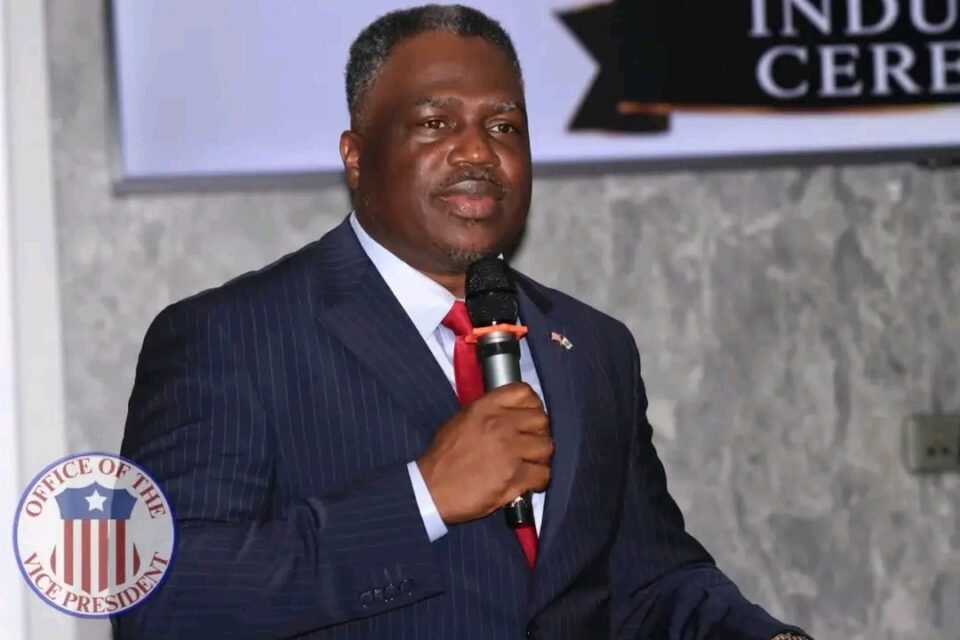
ACCRA, Ghana — Liberia’s Vice President Jeremiah Kpan Koung has urged African countries to take greater control of the economic benefits generated by their mineral resources, warning that continued dependence on raw mineral exports limits job creation, industrial growth, and long-term development.
Koung delivered the message while representing President Joseph Nyuma Boakai at a high-level mineral policy forum in Accra, Ghana, where he called for stronger regional partnerships, transparent mining agreements, and increased investment in processing and manufacturing across the continent.
He argued that Africa must reconsider a development model in which valuable minerals are extracted locally but much of the technology, industrial activity, and commercial benefits associated with them are generated outside the continent.
According to Koung, growing international demand for minerals used in modern technology, manufacturing, and energy production presents an opportunity for African governments to expand their economies and improve living standards.
He maintained that mineral development should go beyond extraction and exports to establish industries that create employment, strengthen domestic businesses, develop technical skills, and increase government revenues.
The Vice President also cautioned against governments making excessive concessions to foreign investors, stressing that attracting capital should not require African nations to weaken environmental protections or sacrifice legitimate public revenue.
He called for a coordinated continental approach to mineral governance that protects national interests, establishes common investment standards, and improves the negotiating power of African countries.
Calls for Regional Industrial Development
Koung identified regional cooperation as essential to building competitive mineral industries, noting that many countries cannot independently provide all the infrastructure, financing, and market access required for large-scale processing.
He encouraged African governments to collaborate on electricity generation, transportation networks, mineral-processing facilities, and access to regional markets.
He said the African Continental Free Trade Area could help countries combine their resources and industrial capabilities to develop stronger regional supply chains and retain more economic value within Africa.
Koung also stressed that governments need reliable geological information, modern laboratories, transparent licensing procedures, and effective revenue-management systems before entering into agreements with international mining companies.
He called for closer cooperation on taxation, beneficial ownership disclosure, local content, and mineral reporting to reduce harmful competition among African states and prevent the loss of potential public revenue.
The Vice President said mining agreements should be assessed not only by the volume of minerals extracted or exported but also by their contribution to employment, skills transfer, domestic enterprise development, and industrial expansion.
Mining Communities Deserve Tangible Benefits
Koung further emphasized that communities hosting mining operations must receive meaningful economic and social benefits from the exploitation of their natural resources.
He called for fair compensation, employment opportunities for local residents, support for domestic suppliers, environmental protection, and better access to essential services.
He also urged governments and mining companies to make provisions for mine closure and livelihood restoration from the beginning of operations, warning against leaving communities economically vulnerable after mineral deposits are exhausted.
On artisanal and small-scale mining, Koung advocated easier access to legal permits, technical assistance, financing, safer working practices, and legitimate markets.
He called for stronger enforcement against mineral smuggling, child labor, and criminal activities that exploit vulnerable miners and undermine government revenues.
Liberia Targets Greater Benefits From Mining
Addressing Liberia’s priorities, Koung reaffirmed the Boakai administration’s commitment to using mineral resources to support economic diversification, infrastructure development, and improved public services under the ARREST Agenda for Inclusive Development.
He identified improved geological surveys, modern licensing and cadastre systems, transparent mineral revenue management, stronger local procurement, and greater domestic value addition as important areas for reform.
The Vice President also highlighted the need for improved environmental management, safer artisanal mining practices, and sustainable economic programs for communities that depend on mineral extraction.
He stressed that planning for the future of mining communities must begin while operations are active and revenues are available, rather than waiting until resources have been depleted.
Koung said Liberia remains committed to working with neighboring countries through the Mano River Union, the Economic Community of West African States, and other African institutions to develop shared infrastructure, align policies, and create opportunities for regional industries.
Proposes Concrete Measures for Africa
To move beyond policy discussions, Koung proposed developing a common mineral policy framework and a regional action plan identifying priority projects for processing and adding value to minerals within Africa.
He also called for coordinated efforts to improve geological data-sharing, strengthen local content requirements, facilitate technology transfer, and secure financing for projects that require further preparation before attracting investors.
Other proposals included joint action against illegal mineral trading and illicit financial flows, alongside an annual ministerial review to assess progress and evaluate whether countries are meeting their commitments.
Koung recommended establishing a transparent performance-monitoring system to track investment, project development, local procurement, workforce training, and the effects of mining on surrounding communities.
He said regular assessments would help governments identify shortcomings, address implementation delays, and hold responsible institutions accountable for agreed measures.
Urges Leaders to Demand Accountability
Koung concluded by urging African governments to pursue international partnerships that respect national sovereignty and deliver measurable benefits, cautioning against allowing competition among foreign powers to overshadow the continent’s development priorities.
He highlighted the potential role of the Africa Minerals Strategy Group, the African Union, the African Minerals Development Center, and regional organizations in coordinating policies, sharing expertise, and monitoring progress.
He challenged participants at the Accra forum to produce practical commitments rather than declarations without clear implementation plans.
Koung said Africa’s mineral resources must serve both current and future generations, emphasizing that successful mineral development should be measured by the prosperity it creates, the opportunities it provides, and the strength of the communities it leaves behind.
Representing President Boakai, he reiterated Liberia’s support for responsible investment and stronger African cooperation, urging leaders to leave the forum with clear priorities, workable projects, and measurable development targets.
